
What is ubuntu? Eric Sirotkin, Raphael Masesa on Co-creating Peace
Host Kathleen Oweegon interviews guests Eric Sirotkin and Raphael Masesa from Ubuntuworks.org to talk about a way of seeing known as ubuntu.

Host Kathleen Oweegon interviews guests Eric Sirotkin and Raphael Masesa from Ubuntuworks.org to talk about a way of seeing known as ubuntu.
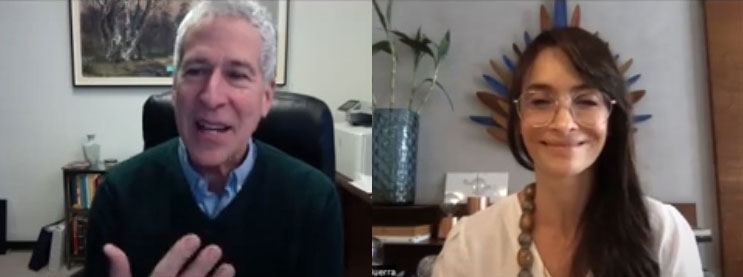
Como podemos aplicar a filosofia Ubuntu no Direito? Eric Sirotkin (US) and Fernanda Guerra (Brazil) discuss how lawyers can change their practice to include active listening and change in their practice based on the philosophy of ubuntu. March 15, 2023. “Don’t become the system you oppose.” –Archbishop Desmond Tutu Como podemos aplicar a filosofia Ubuntu no Direito? O advogado estadunidense Eric Sirotkin fala sobre isso no primeiro SER Talks de 2023. Em entrevista à advogada Fernanda Guerra, idealizadora da SER – Sustentando Elos Reais, o idealizador do Projeto Ubuntuworks explica como é possível fundir os princípios baseados no Ubuntu em escolas, locais de trabalho, corporações e tribunais, redefinindo nossas noções de sucesso. A comunidade mundial Ubuntuworks compartilha pesquisas e estratégias para fazer a diferença e inaugurar uma era de ubuntu local e globalmente, fortalecendo os esforços de todos que trabalham para construir um mundo mais relacional.

The Compassionate Listening Project (TCLP) endeavors to bring compassion to individuals and communities and to create cultures of peace and healing. We accomplish this through workshops, facilitator training, listening journeys and partnerships with humanitarian, social justice and peace-building groups. These offerings cultivate practices that hold courageous and generative space to bring people together across differences. Guided by our commitment to listen and speak from the heart, we cultivate a living culture that grounds TCLP’s vision, principles, practices, and values. This culture embraces human dignity, equity, and inclusivity, as we aspire to expand our ability to authentically see each other as human beings. We humbly believe that this journey is a continual process of learning and unlearning. Compassionate Listening is Read more at https://www.compassionatelistening.org/

The American Cancer Society’s Cancer Prevention Study II (CPS-II) in the American Journal of Epidemiology (Jan 2019) finds that attending to social as well as clinical risk factors holds promise for reducing mortality in the United States.Large study. Addressing social isolation may facilitate improved health outcomes.

by Helen Thomas Published in: Edsurge, Jan 13, 2022 EXCERPT: After nearly two years of teaching, I realized many of the systems and practices I cultivated in my classroom were deeply rooted in my Indigenous knowledge as a Lakota woman. Take relationship building for example. Only recently has mainstream education research realized that without authentic relationships rooted in mutual respect and understanding, meaningful and long lasting learning is nearly impossible. But Indigenous communities have always understood its impact on knowledge transfer. Indigenous ways of knowing and learning emphasize nurturing relationships not only with and among learners, but also with the larger community and the environment or place with which students spend time. All educators, whether they are Indigenous or not, can learn from these systems how to root their teaching and learning in community and place-based context. In the past I have connected with people across the community who care about our children’s education—parents, grandparents, caregivers, community members and tribal education and culture departments. Because I work with Indigenous students from tribal nations that are not my own, I approach these partnerships with cultural humility and willingness to listen. After building relational trust, local community members share resources and context on local issues and history that I use to create lessons. In the end, these lessons often build on the unique strengths and experiences of the students in my class, and learning opportunities that are genuinely meaningful to them. Read more at https://www.edsurge.com/news/2022-01-13-indigenous-knowledge-is-often-overlooked-in-education-but-it-has-a-lot-to-teach-us Photo: Oglala Lakota College Historical Center

by Nadia Reckmann, Feb 21, 2023 Corporate social responsibility is a type of business self-regulation with the aim of social accountability and making a positive impact on society. Some ways that a company can embrace CSR include being environmentally friendly and eco-conscious; promoting equality, diversity, and inclusion in the workplace; treating employees with respect; giving back to the community; and ensuring business decisions are ethical. CSR evolved from the voluntary choices of individual companies to mandatory regulations at regional, national and international levels. However, many companies choose to go beyond the legal requirements and embed the idea of “doing good” into their business models. There is no one way a company can embrace CSR, but one thing is certain – to be perceived as genuine, the company’s practices need to be integrated into its culture and business operations. In today’s socially conscious environment, employees and customers place a premium on working for and spending their money on businesses that prioritize CSR. They can detect corporate hypocrisy. Read more at: https://www.businessnewsdaily.com/4679-corporate-social-responsibility.html The Ubuntuworks Resource Hub provides organizations and individuals with data, stories, studies and support for a more connected and compassionate world.
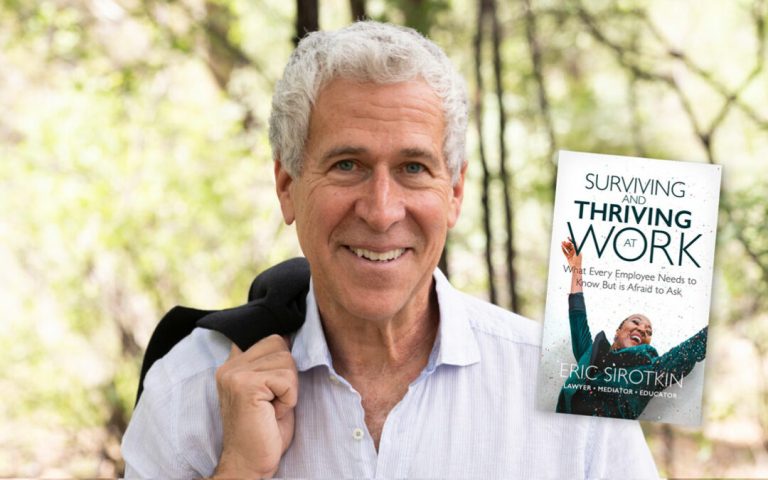
Eric Sirotkin’s readable book is a practical guide based on the lessons learned from a lifetime of counseling employees and litigating cases.
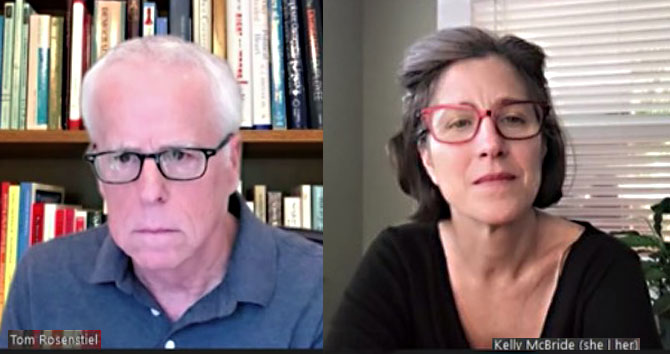
Wednesday, April 28, 2021 Foreign Press Center, WASHINGTON, D.C.—What are the prevailing norms in journalistic ethics in the United States, and how are they changing? In advance of World Press Freedom Day, the Foreign Press Center hosted a conversation between Kelly McBride , Chair of the Craig Newmark Center for Ethics and Leadership at Poynter, and Tom Rosenstiel , Executive Director of the American Press Institute, who together discuss new ethical challenges journalists face in the United States’ evolving media landscape. The discussion covered pressures being brought to bear on journalists by technology, social media, increasing disinformation, and changing audience habits, with case study examples to illustrate specific challenges. MS MCBRIDE “[T]here is a real tension, almost an existential question, of whether the press can both reflect all of America, all of the community that it is supposed to serve, and also grapple with the tension of inequality in the United States and in journalism…[E]ven before George Floyd, even before the pandemic, there were many individuals in American newsrooms who were feeling as if they could not…accurately report on the world that they see and experience, because of constrictions that were placed upon them in language, in what they can say, and in how they can say it. “Those constrictions are – come under the guise of—neutrality. And that understanding and application of what it means to be neutral or to pursue the truth without an agenda is currently at odds with many people who get into journalism to challenge the power structures, which is… part of why journalism exists in the United States. And the power structures that they want to challenge are the structures that sometimes overtly and sometimes covertly reinforce a white privilege and a world that won’t share its resources.” MR ROSENSTIEL: “I’ve written a lot, as you know, about what is the meaning and the origin of the concept of objectivity. And I’ll just say for this audience, in my reckoning and reading of the history, objectivity does not mean neutrality. It actually means that you have an objective method of processing and verifying the news that you can share with your audience, precisely because you as a person and as a journalist can never be personally objective. So you have a view that you start with and what you’re trying to do as a journalist to get a more accurate rendering of things is to learn about the views of other people. Diversity, listening, all of these things that people are talking about are important skills in that, and it also means that where we are in the arc of a story determines to some degree how neutral or open…we are. “ Watch the full briefing and read the transcript at: https://www.state.gov/briefings-foreign-press-centers/understanding-america-the-future-of-media-ethics/