
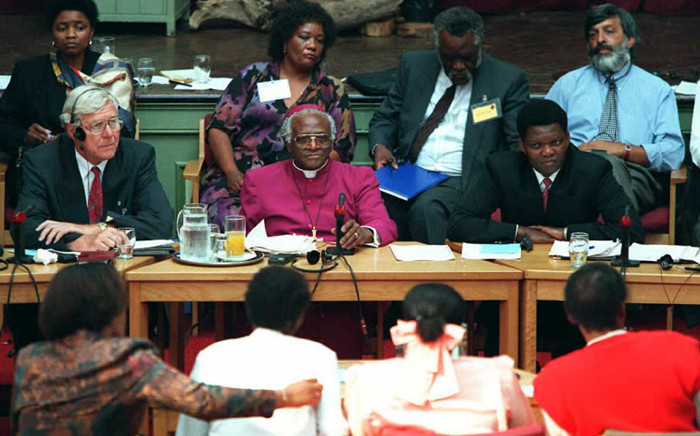
The Archbishop Wept: Remembering the Hearings
The South African Truth and Reconciliation Commission (TRC) is cited as a model around the world for healing the trauma of a nation or community. Yet, on my recent trip to South Africa a great topic of concern everywhere was the “unfinished” work of the TRC and how the populace was left disillusioned, as money has been siphoned off in sweetheart deals and the reparations side of the Truth Commission failed to deliver. I remember those hearings as if they were yesterday. I was there monitoring an International Project for the TRC and feeling so deeply the draining nature of the stories of gross human rights violations and atrocities. We wept with Archbishop Tutu in the first hearings in 1996 as he put his head down on the table and tears flowed like the blood from the attack that triggered his reaction. He wept for the whole nation and for all of us who feel a great disconnect from a world still fueled by war and violence. One night last month outside Cape Town my dear friends Ilze and Stef and I read poems to each other at a bar by the sea. Remarkably Ilze read: The Archbishop Chairs the First Session by South African poet, Ingrid de Kok The Truth and Reconciliation Commission. April, 1996. East London, South Africa On the first day after a few hours of testimony the Archbishop wept. He put his grey head on the long table of papers and protocols and he wept. The national and international cameramen filmed his weeping, his misted glasses, his sobbing shoulders, the call for a recess. It doesn’t matter what you thought of the Archbishop before or after, of the settlement, the commission, or what the anthropologists flying in from less studied crimes and sorrows said about the discourse, or how many doctorates, books, and installations followed, or even if you think this poem simplifies, lionizes romanticizes, mystifies. There was a long table, starched purple vestment and after a few hours of testimony, the Archbishop, chair of the commission, laid down his head, and wept. That’s how it began. Archbishop Tutu had told me on a break that day that he should not have lost his composure as the chair of the Commission, but it was a courageous and necessary human reaction to such torture. How we long for leaders who can not only point out problems, or offer packaged solutions, but can put down their heads, in the face of war, violence, or hunger, and weep. – – – – – Photos, Top: Archbishop Desmond Tutu (center) with fellow commissioners listen to testimony from witnesses during the start of the Truth and Reconciliation Commission which opened in East London, 15 April 1996, Picture-AFP. Bottom: Archbishop Tutu, TRC 1997 Sunday Times by Raymond-Preston